
Blog
Pre-Exhaustion Training: What It Is, Science & How-To
Learn what pre-exhaustion training is, what scientific research says about its hypertrophy benefits, and how to program pairings safely.

Pre-Exhaustion Training: What It Is, Science & How-To
Discover the physiology, research findings, and practical protocols behind fatiguing target muscles before compound lifts.
Pre-exhaustion training is an advanced resistance method where you perform an isolation exercise immediately before a multi-joint compound exercise for the same target muscle group. It fatigues the prime mover first so smaller secondary muscles do not cut your sets short.
Peer-reviewed research published through the National Strength and Conditioning Association confirms the method produces solid muscle hypertrophy, comparable to traditional exercise sequencing. However, it changes joint loading and motor unit recruitment substantially. Understanding those trade-offs determines whether you break a plateau or simply exhaust yourself.
What Pre-Exhaustion Training Is (and How It Works)
Pre-exhaustion operates on a simple physiological concept: isolate the prime mover first to ensure it reaches complete mechanical fatigue during a subsequent multi-joint movement. In standard compound movements, smaller assisting muscles—known as synergist muscles—frequently reach failure before the larger target muscle has worked to full capacity.
Consider the barbell bench press. Your triceps brachii or anterior deltoids might fail on rep eight, leaving the pectoralis major under-stimulated. By completing a set of dumbbell flyes or machine pec deck flyes first, you fatigue the chest fibers directly before starting the press.
Bodybuilder Mike Mentzer famously popularized this high-intensity concept during the late 1970s. However, lifters often confuse pre-exhaustion with post-exhaustion. Post-exhaustion reverses the sequence by performing the heavy multi-joint lift first and chasing it with an isolation movement, whereas pre-exhaustion intentionally weakens the prime mover beforehand.
- Single-joint isolation first: You perform a movement that minimizes secondary muscle involvement, focusing 100% of the mechanical tension on the agonist.
- Immediate or brief transition: You shift to a multi-joint exercise within 0 to 90 seconds, relying on fresh synergists to push the fatigued agonist past failure.
- Full motor unit recruitment: The target muscle activates high-threshold motor units under lower absolute loads, as described in motor unit recruitment principles.

What Science Shows About Pre-Exhaustion and Hypertrophy
Clinical trials reveal pre-exhaustion stimulates robust muscle hypertrophy, but it does not outperform traditional exercise sequencing for pure muscle mass. While the logic sounds flawless on paper, surface electromyography (EMG) studies paint a more nuanced physiological picture.
In a landmark study led by Gentil et al. (2007), researchers tracked muscle activation during a pec deck flye followed by a barbell bench press. Instead of increasing chest activation during the bench press, the pre-exhausted pectorals showed unchanged or decreased EMG activity, while triceps brachii activation surged dramatically to compensate.
15-30%
Average load drop on compound lifts
0-15s
Superset transition window
Equal
Long-term hypertrophy vs standard order
Follow-up research by Fisher et al. (2014) evaluated long-term training adaptations over a multi-week trial. Lifters using pre-exhaustion gained meaningful size and strength, but the results were statistically indistinguishable from lifters performing standard straight sets in a traditional compound-first order.
Hypertrophy guidelines from the American College of Sports Medicine highlight that total weekly volume of challenging sets close to failure governs muscle growth. A systematic review in Frontiers in Physiology confirms that exercise order alters acute fatigue distribution, yet aggregate mechanical tension drives tissue remodeling.
| Study / Publication | Protocol Evaluated | Key Finding | Practical Implication |
|---|---|---|---|
| Gentil et al. (2007) | Pec Deck Flye → Bench Press | Triceps activation increased; chest EMG remained flat | Synergists work harder to compensate for fatigued prime movers |
| Fisher et al. (2014) | Pre-Exhaust vs. Traditional Sequencing | No significant difference in hypertrophy or strength | Pre-exhaustion works as an alternative variation, not a superior shortcut |
| Trindade et al. (2022) | Leg Extension → Leg Press | 15-25% drop in leg press load with equal quad volume | Achieves muscular failure with lighter absolute barbell or machine loads |
Practical Benefits for Stubborn Muscles and Joint Health
Pre-exhaustion excels when you need to bypass secondary muscle failure, manage chronic joint discomfort, or squeeze maximum metabolic stress into brief workouts. Even if it does not double your hypertrophy, it offers distinct practical advantages over standard straight sets.
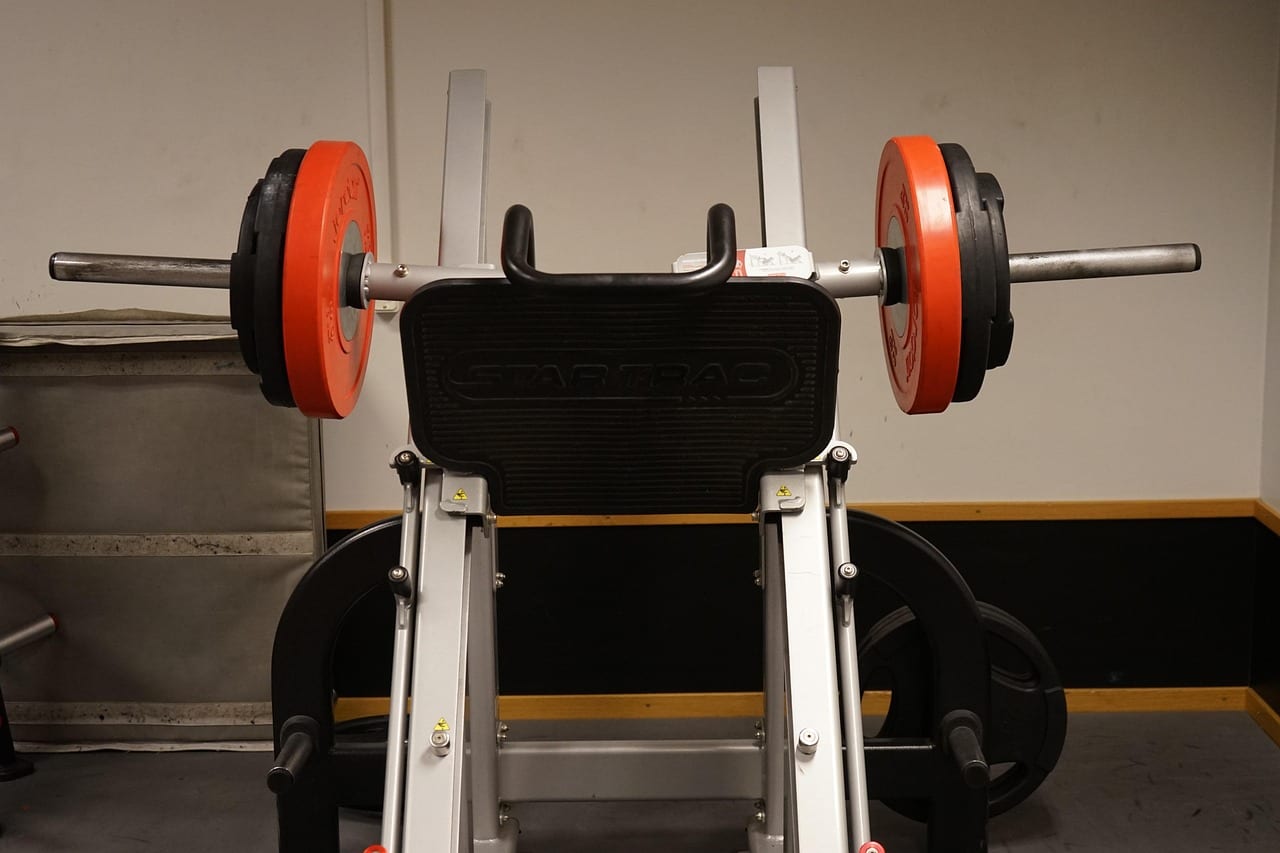
The most significant advantage is joint-friendly loading. Heavy squats and bench presses place massive shear stress on knees, hips, and shoulders. Because pre-fatigue reduces your working weight on compound movements by 20% or more, your target muscles experience full mechanical strain while your connective tissues handle far lighter absolute loads.
It also sharpens neuromuscular engagement. Many lifters struggle to feel their lats or quadriceps firing during multi-joint lifts. Isolating the muscle first primes the nervous system, creating an intense local pump that makes target contractions unmistakable during the compound lift.
- Joint preservation: Achieve motor unit exhaustion on compound lifts without loading spine or connective tissues to maximum capacity.
- Enhanced mind-muscle connection: Engorging the muscle with blood via single-joint pumps heightens proprioceptive feedback on subsequent presses or pulls.
- Overcoming stubborn plateaus: Shakes up routine when standard progression stalls, pairing well with principles of training for muscular endurance.
- Efficient training density: Running pre-exhaust pairings as supersets condenses workout duration without cutting total working sets.
Drawbacks and Why It Hampers Raw Strength
The primary trade-off of pre-exhaustion is a drastic drop in absolute compound strength, making it counterproductive for competitive powerlifting or raw strength goals. Heavy strength adaptations depend directly on maximal mechanical tension and motor coordination under peak loads.
Evidence compiled in Sports Medicine shows neuromuscular recruitment patterns change when prime movers enter a compound movement fatigued. If your quads are pre-exhausted from leg extensions, executing a heavy barbell back squat becomes technically dangerous.
Pre-exhaustion sacrifices peak mechanical tension on compound movements in exchange for local fatigue. Use it for targeted hypertrophy and joint longevity, never for setting personal records.
Fatigued prime movers force secondary muscles to take the brunt of the load. In a fatigued squat, your lower back, glutes, and adductors fight to stabilize the barbell as quad drive falters, drastically increasing the risk of technical breakdown.
- Submaximal strength expression: Absolute load drops significantly, blunting maximum force production and neurological 1RM adaptations.
- Elevated injury risk on free weights: Fatigued prime movers compromise posture and joint alignment during technically demanding lifts like squats or deadlifts.
- Disproportionate synergist fatigue: Smaller muscles like triceps or front deltoids often fail even faster on the compound exercise.
- Heightened systemic exhaustion: Moving immediately between intense exercises generates substantial cardiovascular fatigue, which can limit your overall workout output.
How to Program Pre-Exhaustion Sets and Rest Periods
Program pre-exhaustion by grouping one isolation movement with one compound exercise for two to three working sets per target muscle group. Overusing this technique across an entire routine causes excessive central fatigue and ruins your total weekly volume.
You can structure pairings using either a superset protocol or a straight-set protocol. If your primary aim is metabolic stress and pump, take 0 to 15 seconds of rest between the isolation and compound movements.

If you want to preserve motor control and prioritize mechanical tension, take 60 to 90 seconds of rest before moving to the compound exercise. This brief window lets cardiovascular fatigue subside while keeping the prime mover sufficiently pre-exhausted. Lifters balancing intensity structures can compare this with reverse pyramid training protocols to decide which fits their recovery capacity.
Superset Method
Staggered Straight Sets
Target Rep Ranges
Weekly Frequency
Managing progressive overload requires precise volume tracking. Tracking load reductions and rep targets becomes simpler when utilizing automated workout analytics or AI tools for strength training to regulate set volume.
- Stop 1-2 reps shy of failure on isolation: Do not hit total muscular failure on the first lift; leave 1 rep in reserve (RIR 1) to preserve technique for the compound lift.
- Prioritize machines for compound movements: Replace free-weight barbell presses and back squats with Smith machines, hack squats, or dumbbell presses.
- Limit working volume: Cap pre-exhaust pairings at 2 to 3 sets per workout to avoid blunting recovery for your next session.
- Maintain controlled tempo: Use a 2-second eccentric phase on both movements to maximize active muscle tension.
Recommended Pre-Exhaustion Pairings by Muscle Group
Successful pre-exhaust pairings require movements that share identical motor patterns and isolate the prime mover without fatiguing your stabilizing muscles. Matching the right exercises prevents premature systemic failure.
Selecting machine-based compound movements instead of barbell variations protects your spine and joints when fatigue sets in. The table below outlines field-tested exercise combinations for every major muscle group.
| Muscle Group | Isolation Exercise (First) | Compound Exercise (Second) | Rest Interval |
|---|---|---|---|
| Quadriceps | Leg Extension (12-15 reps) | Leg Press or Hack Squat (8-10 reps) | 30-60 seconds |
| Chest (Pectorals) | Cable Flye or Pec Deck (12-15 reps) | Dumbbell or Machine Incline Press (6-8 reps) | 15-30 seconds |
| Back (Latissimus Dorsi) | Dumbbell Pullover or Cable Straight-Arm Pulldown (12-15 reps) | Chest-Supported Machine Row or Lat Pulldown (8-10 reps) | 30-60 seconds |
| Hamstrings | Lying or Seated Leg Curl (10-12 reps) | Romanian Deadlift or 45° Back Extension (8-10 reps) | 60-90 seconds |
| Deltoids (Lateral/Posterior) | Cable Lateral Raise (12-15 reps) | Seated Machine Overhead Press (8-10 reps) | 30-45 seconds |
- Chest pairing: Cable flyes isolate the sternal pec fibers without triceps involvement, priming your chest for deep stretch and contraction on machine presses.
- Quadriceps pairing: Leg extensions load the rectus femoris directly. Transitioning to a hack squat or leg press drives vastus lateralis recruitment safely.
- Back pairing: Straight-arm pulldowns eliminate biceps involvement, ensuring your lats fatigue fully before taking on chest-supported rows.
- Hamstrings pairing: Seated leg curls isolate knee flexion. Following with Romanian deadlifts targets hip extension while hamstrings are already primed.
- Shoulders pairing: Cable lateral raises fatigue the lateral deltoid heads, preventing your triceps from dominating subsequent machine overhead presses.
Does pre-exhaustion training build more muscle than regular lifting?
Is pre-exhaustion safe to use with barbell back squats?
How often should I include pre-exhaustion in my routine?
What is the difference between pre-exhaustion and post-exhaustion?
For lifters looking to automate workout sequencing and track progressive overload effortlessly, Fitnix builds tailored, adaptive training routines that fit your specific equipment, goals, and recovery capacity.
Sources & References
- National Strength and Conditioning Association (NSCA) — Professional guidelines and peer-reviewed standards for resistance exercise programming.
- PubMed / NIH (Gentil et al., 2007) — Clinical EMG study examining muscle activation in pec deck pre-exhaustion prior to bench pressing.
- Wikipedia — Foundational physiology on Henneman's size principle and motor unit recruitment mechanics.
- PubMed / NIH (Fisher et al., 2014) — Randomized clinical study assessing long-term hypertrophy and strength outcomes of pre-exhaustion training.
- American College of Sports Medicine (ACSM) — Position stands on resistance exercise volume, load parameters, and progression models for healthy adults.
- Frontiers in Physiology — Peer-reviewed open access research on exercise order and neuromuscular fatigue distribution.
- Springer Link / Sports Medicine — Systematic analysis of mechanical tension, neuromuscular fatigue, and muscle hypertrophy adaptations.