
Blog
AI Workout Finishers: Optimize Your Final Gym Push
Learn how AI workout finishers dynamically adapt to your fatigue levels, maximize EPOC, and force muscle adaptation without risking overtraining.

Using Workout Finishers: An AI-Generated Final Push
Discover how adaptive algorithms safely drain your remaining energy reserves, triggering maximum metabolic adaptation in the final five minutes of your session.
Let's be honest: adding AI workout finishers to the end of your session is the difference between merely surviving a workout and actually forcing your body to adapt. If you are walking out of the gym feeling like you could have done another set, your programming is leaving results on the table.
The final five minutes of your routine dictate your metabolic response for the next 24 hours. Historically, athletes relied on static burnout sets—like 100 burpees or endless crunches—regardless of what they did earlier in the hour. Today, that approach is dangerously outdated.
By dynamically adjusting those final reps based on your real-time fatigue, we can completely drain the targeted energy systems safely. This guide breaks down exactly how adaptive technology optimizes the end of your session for maximum hypertrophy and fat loss.
The Physiology of Emptying the Tank
Understanding the mechanics of a final burnout requires looking at how your body manages fuel. When you lift heavy weights, your body relies primarily on the ATP-PC system and anaerobic glycolysis. By the end of a solid 45-minute lifting session, those immediate energy stores are largely depleted.
This is precisely where the magic of a targeted final push happens. According to the National Academy of Sports Medicine, introducing a highly dense, fast-paced metabolic circuit at this exact moment forces your body to rapidly recruit deep muscle fibers that survived the main workout.
If you are figuring out how to start a fitness routine that actually changes your body composition, mastering this physiological tipping point is essential. You are intentionally creating an extreme cellular energy crisis that triggers adaptation.
The EPOC Effect Explained
The primary goal of ending your session with high intensity is to trigger Excess Post-Exercise Oxygen Consumption. Research indexed in PubMed consistently demonstrates that high-intensity interval bursts create an oxygen debt that your body must repay long after you leave the facility.
During this repayment period, your core temperature remains elevated, your cardiovascular system works overtime to clear metabolic byproducts, and your body preferentially utilizes oxidized fat to facilitate recovery.
24-36 Hours
Average duration of elevated metabolic rate post-finisher
15%
Potential increase in total session calorie burn
3-5 Mins
Optimal duration for a highly effective metabolic burnout
You do not need 30 minutes on a treadmill to achieve this. A tightly compressed, aggressively paced four-minute circuit can yield a significantly higher EPOC response than steady-state cardio, provided the intensity pushes your heart rate above 85% of its maximum.
Central vs. Peripheral Fatigue
It is crucial to distinguish between feeling tired and experiencing actual neurological depletion. Peripheral fatigue happens in the muscle tissue itself—like the burning sensation in your quads after walking lunges. Central fatigue involves your brain and spinal cord failing to send strong signals to the muscles.
Data from Harvard Medical School indicates that pushing through severe central fatigue is where injuries occur. A properly designed final push deliberately targets peripheral fatigue while protecting the central nervous system by avoiding highly technical, heavy lifts.

- Targets local muscle endurance without frying your systemic recovery pathways.
- Forces lactic acid pooling, which stimulates the release of natural growth hormone.
- Improves pain tolerance by conditioning the mind to push through localized discomfort.
- Maintains movement quality by relying on simple, easily executed biomechanics.
Why Adaptive Algorithms Beat Static Routines
The biggest problem with internet-sourced workout plans is their rigidity. If a PDF tells you to finish your leg day with 100 jump squats, it has no idea whether you just hit a personal record on barbell back squats or if you skipped them entirely due to knee pain.
This is why static programming falls apart at the end of a session. When you are fatigued, your mechanics degrade. Guidelines from the NSCA suggest that prescribing high-impact volume without accounting for prior mechanical stress is a primary driver of overuse injuries.
This is where Fitnix changes the paradigm. By generating a custom workout plan that adjusts in real time, the software looks at exactly what you have accomplished in the last 45 minutes before assigning your final push.
Real-Time Volume Auto-Regulation
Auto-regulation is the concept of adjusting your training volume based on daily readiness. If the system sees you missed your target reps on your last set of bench press, it knows your pressing muscles are compromised.
Instead of blindly throwing you into a push-up burnout, the engine instantly pivots. It might route you into a high-intensity core circuit or a lower-body cardiovascular burst, ensuring you still get the metabolic conditioning without risking a shoulder impingement.
| Feature | Static PDF Routine | Fitnix Adaptive Engine |
|---|---|---|
| Exercise Selection | Fixed, regardless of previous sets | Dynamically swaps based on muscle fatigue |
| Volume Scaling | Arbitrary rep goals (e.g., 50 reps) | Time-based or scaled to current capacity |
| Injury Prevention | Relies entirely on user self-policing | Actively avoids overworked joint angles |
| Progression | Requires manual adjustment weekly | Automatically increases density over time |
Injury Prevention Through Fatigue Tracking
The end of the workout is the danger zone for connective tissue. As muscles fail, tendons and ligaments are forced to absorb loads they aren't designed to handle. Studies in the Journal of Strength and Conditioning Research highlight that form breakdown at the end of a session accounts for a massive percentage of gym injuries.
By utilizing intelligent software, your final exercises are specifically chosen from a library of safe, low-complexity movements. You can push to absolute failure on a battling rope or a sled push without the risk profile of trying to push to failure on a barbell snatch.
The goal of the final five minutes is metabolic devastation, not mechanical destruction. If your form requires intense concentration to remain safe, it does not belong at the end of your session.
Top Finisher Formats for Different Goals
Not all final pushes are created equal. The protocol you choose should align with your primary training goal for that specific 12-week block. Whether you are chasing dense muscle tissue, rapid fat oxidation, or ironclad core stability, the format matters.
The American Council on Exercise categorizes these bursts into several time domains, each eliciting a slightly different hormonal response. Here are the three most effective structures your software will typically deploy.

AMRAP for Muscular Endurance
AMRAP stands for 'As Many Rounds (or Reps) As Possible.' This format provides a set time limit—usually between three and six minutes—and challenges you to complete a specific circuit repeatedly until the clock stops.
This is excellent for building muscular endurance and forcing blood into the tissue. By incorporating essential bodyweight exercises like jumping lunges and mountain climbers, an AMRAP safely spikes your heart rate.
- Pacing is critical: Do not sprint the first 30 seconds only to rest for the next minute.
- Transitions must be zero: Pick exercises that allow you to move from one to the next instantly.
- Track your rounds: Use your score as a benchmark to beat the next time this specific circuit appears.
EMOM for Metabolic Conditioning
EMOM, or 'Every Minute on the Minute,' forces strict work-to-rest ratios. At the top of each minute, you perform a prescribed number of reps. The faster you finish, the more rest you get before the next minute begins.
This structure is highly effective for maintaining power output under fatigue. It forces your cardiovascular system to recover rapidly. As the minutes tick by, your heart rate struggles to drop back to baseline, heavily taxing your aerobic capacity.
Isometrics for Mind-Muscle Connection
Sometimes the best way to end a session is not with frantic movement, but with agonizing stillness. Isometric holds demand that you contract a muscle against an immovable force or hold a static position until failure.
A two-minute wall sit or a max-effort plank directly recruits stabilizing fibers. Because there is no joint movement, the friction on your tendons is near zero, making this the perfect choice if your joints feel beat up from heavy lifting.
Step-by-Step Implementation Strategy
Knowing the science is useless if you execute poorly on the gym floor. Adding a high-intensity burst to your program requires discipline, proper timing, and a willingness to embrace severe, short-term discomfort.
The Mayo Clinic defines proper exercise sequencing as moving from the most complex, neurologically demanding tasks to the simplest. Your final routine must honor this rule. Here is exactly how to sequence it.
- Complete your primary lifting block: Finish every heavy, compound movement prescribed in your routine without rushing your rest periods.
- Assess your central fatigue: Be honest with the application. If you are dizzy or feeling sharp pains, skip the metabolic burst for the day.
- Review the generated circuit: Look at the exercises the software assigned. Ensure you have the space and equipment staged before starting the timer.
- Execute with absolute intensity: For those 3 to 5 minutes, do not check your phone or chat. The effectiveness relies entirely on your output.
- Mandatory active recovery: Never sit or lie down immediately after. Walk slowly for at least 90 seconds to allow your heart rate to step down safely.

Assessing Your Remaining Capacity
Before you hit 'start' on the final circuit, you must run a quick internal diagnostic. Are your hamstrings cramping? Is your grip completely shot? The intelligence of the platform relies on accurate feedback.
If you input that your grip is fried, the platform will swap out dumbbell farmer carries for a hands-free movement like hollow body rocks. Always use the few minutes after your main lift to evaluate your exact physical state.
Selecting the Right Modality
If you are in a crowded commercial facility at 5:00 PM, a circuit requiring a barbell, a rowing machine, and a patch of turf is going to fail. You will lose your intensity waiting for equipment.
Filter your final push based on your immediate environment. Select dumbbell-only or bodyweight parameters if you are pinned in one corner of the room. The continuity of the exercise is vastly more important than the specific gear used.
Crucial Mistakes to Avoid at the End
Because you are operating in a state of deep fatigue, the margin for error shrinks drastically. Doing the wrong movement here will ruin your recovery for the entire week and potentially sideline you with a strain.
Research published in Sports Medicine points directly to poorly programmed metabolic conditioning as a major source of rhabdomyolysis and severe tendonitis. Avoid these critical errors.
- Adding Heavy Axial Loading: Never use heavy squats, deadlifts, or overhead presses as a final burnout. Your spinal stabilizers are already fatigued.
- Ignoring Form for Speed: If your lower back rounds during kettlebell swings, the set is over. Stop the timer. Mechanical failure precedes actual muscle failure.
- Doing It Every Single Day: High-intensity finishers spike cortisol. The International Society of Sports Nutrition warns that constant systemic stress blunts hypertrophy.
- Using Highly Technical Movements: Olympic lifts like snatches and cleans require perfection. They do not belong in a fatigued state under a ticking clock.
The Danger of Over-Competing
It is easy to get caught up trying to beat your previous score or top a leaderboard. However, when the clock dictates your pace, ego can easily override common sense. You must remember the goal is physiological adaptation, not winning a gold medal in gym class.
If you feel your form slipping on a push-up, drop to your knees immediately. Modifying the movement to keep moving safely is always superior to executing ugly, dangerous repetitions just to log a higher number in the app.
Tracking the Impact of Your Final Burn
You cannot manage what you do not measure. If you are going to put yourself through the misery of a heavy metabolic burnout, you need to know it is actually driving your fitness forward rather than just digging a deeper recovery hole.
The Physiological Reviews archive shows that chronic, unmonitored high-intensity training leads to parasympathetic nervous system suppression. We need concrete data to ensure you are recovering properly between sessions.
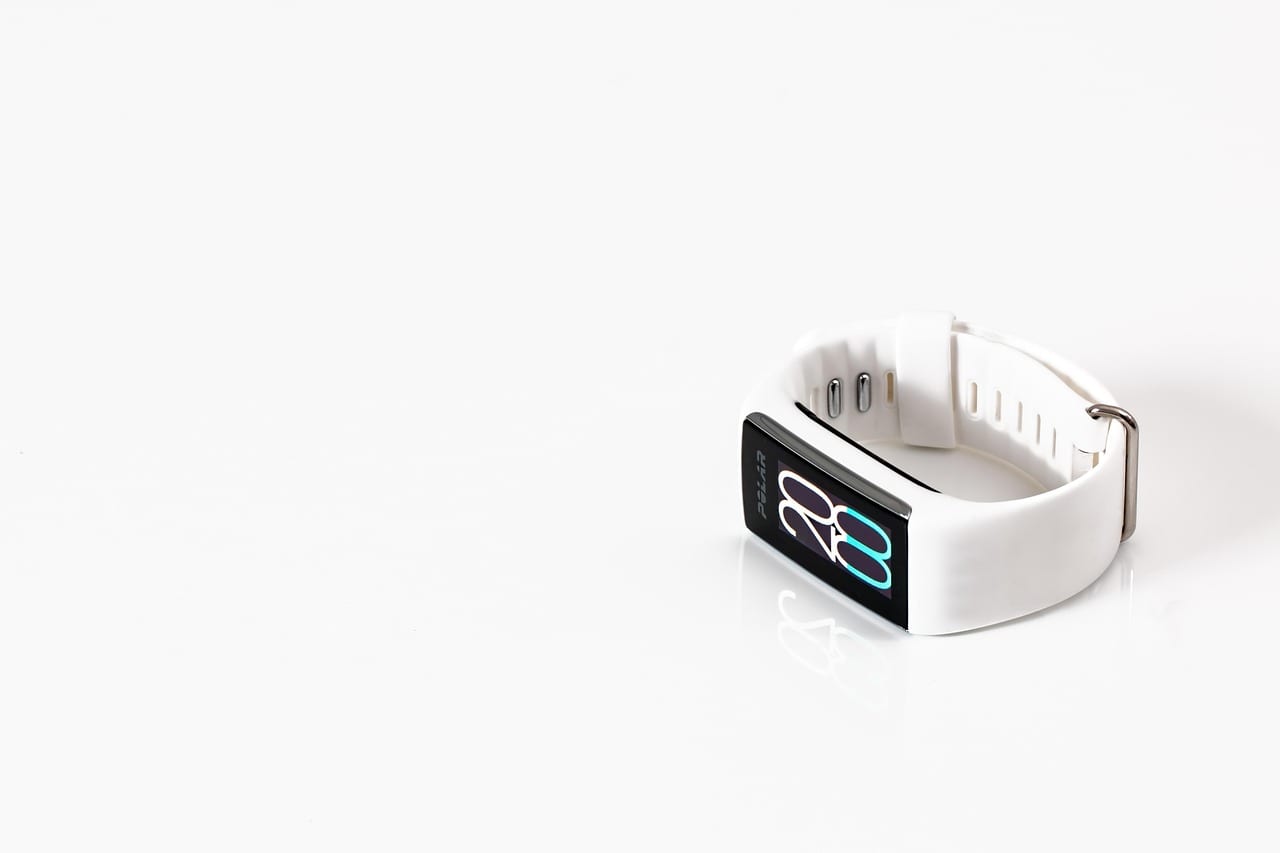
Measuring Heart Rate Recovery (HRR)
Your Heart Rate Recovery is the most powerful metric for cardiovascular fitness. After you finish your final interval, check your peak heart rate. Sit quietly for exactly 60 seconds, then check it again. The difference is your HRR.
If your heart rate dropped by 20 beats or more, your aerobic system is highly resilient. If it only drops by 10 beats, your body is struggling to clear the systemic stress. Over a 12-week program, your AI engine should help push that drop significantly higher.
Assessing Next-Day Soreness
Delayed Onset Muscle Soreness (DOMS) is normal, but crippling pain is not. If your final burnout leaves you unable to walk down stairs for three days, the volume was too high. The algorithm will learn from this if you input accurate recovery data.
The goal is a dull ache that lets you know you worked hard, not joint pain that forces you to skip your next scheduled session. Consistency always beats sporadic, extreme efforts that require a week of downtime.
Sources & References
- National Academy of Sports Medicine (NASM) — Guidelines on metabolic conditioning and energy system depletion.
- PubMed — Clinical studies on Excess Post-Exercise Oxygen Consumption (EPOC).
- Harvard Medical School — Data regarding central nervous system fatigue and injury rates.
- NSCA — Principles of programming and the dangers of high-impact fatigue.
- Journal of Strength and Conditioning Research — Studies highlighting form breakdown and gym injury statistics.
- American Council on Exercise (ACE) — Categorization of high-intensity time domains and hormonal responses.
- Mayo Clinic — Medical definitions for proper exercise sequencing and active recovery.
- Sports Medicine — Research regarding poorly programmed conditioning and rhabdomyolysis.
- International Society of Sports Nutrition (ISSN) — Warnings on how chronic systemic stress blunts muscle hypertrophy.
- Physiological Reviews — Archives concerning parasympathetic nervous system suppression from overtraining.